
 In today’s packaging industry, reducing waste is no longer just an environmental consideration, it is a commercial necessity. Rising board costs, increased pressure on sustainability targets, and the demand for faster production all mean that corrugated and carton packaging manufacturers must find smarter ways to use materials and optimise workflows.
While material selection plays an important role, one of the biggest opportunities to reduce waste comes much earlier in the process - packaging design and production planning.
Modern packaging CAD software such as KASEMAKE helps designers and manufacturers improve material utilisation, streamline production, and reduce unnecessary waste across the entire workflow.
Intelligent Nesting and Layout Optimisation
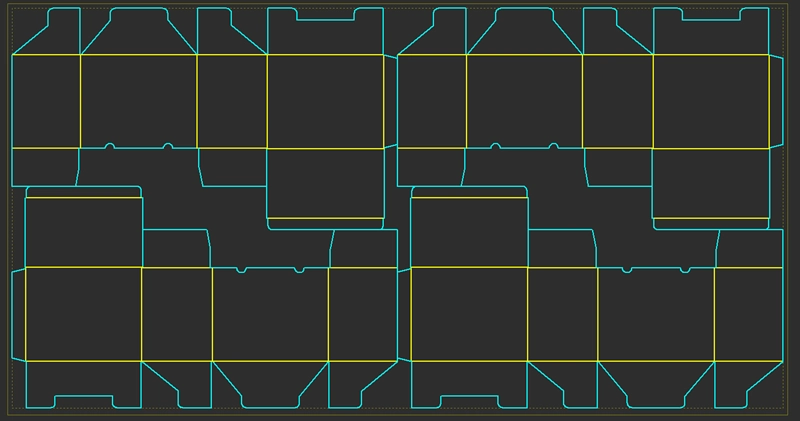
One of the most effective ways to reduce waste in corrugated and carton packaging production is through intelligent nesting and sheet layout optimisation.
Every millimetre of unused board represents wasted material and increased production costs. Across thousands of sheets, even small inefficiencies can become significant.
KASEMAKE includes advanced nesting and layout tools designed specifically for packaging production. These features allow designers and operators to
- Arrange cartons and corrugated designs for maximum material usage
- Reduce offcuts and unused board areas
- Optimise layouts for specific sheet sizes
- Quickly test alternative arrangements to identify the most efficient option
- Produce a wastage report to quickly compare layout options
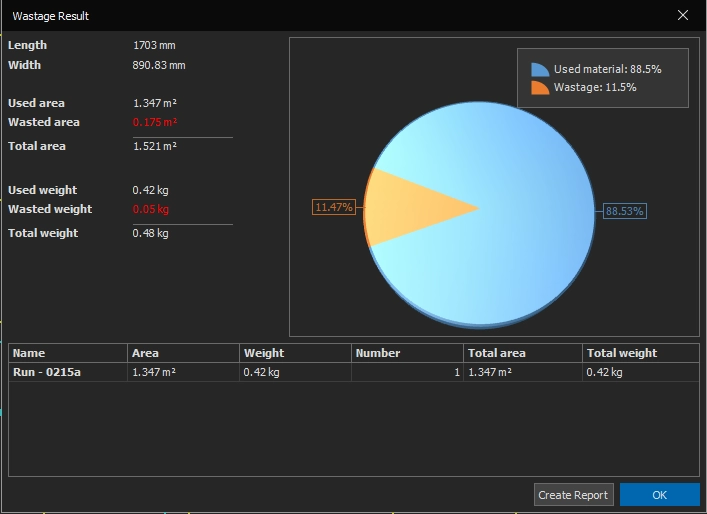
For businesses producing short-run and prototype work, these efficiencies can make a major difference to profitability. For larger production runs, the material savings can be substantial over time.
Reducing Waste Beyond the Material
Waste reduction is not only about the amount of board used. Production efficiency also has a major impact on waste, labour costs, machine time, and energy consumption.
Efficient layouts help reduce the number of passes required during
- Printing
- Die cutting
- Digital cutting
- Finishing operations
By organising jobs more effectively, manufacturers can often complete work in fewer machine cycles, reducing setup times and improving throughput.
This creates several advantages
- Less machine downtime
- Reduced operator intervention
- Lower energy usage
- Faster turnaround times
When workflows are optimised correctly, businesses can achieve both sustainability improvements and operational savings at the same time.
Smarter Digital Cutting Workflows
Digital cutting systems have become increasingly important in corrugated and carton production, particularly for prototyping, short-run packaging, and sample creation.
When combined with intelligent CAD software, digital cutting workflows become significantly more efficient.
KASEMAKE integrates with a wide range of digital cutting systems, allowing users to prepare production-ready layouts quickly and accurately. Optimised cutting paths and efficient job layouts help reduce unnecessary machine movement and improve production speed.
This is particularly valuable when handling
- Prototype packaging
- Short-run packaging jobs
- POS displays
- Corrugated sample making
- Custom ecommerce packaging
Reducing cutting time not only improves productivity but also reduces wear on machinery and lowers operational costs.
Finding the Right Balance
While maximising material usage is important, there is always a balance to strike.
In some cases, creating an extremely complex nesting arrangement may save a small amount of material but increase setup time, operator input, or production complexity. For short production runs, the additional labour and preparation time may outweigh the material savings.
The most efficient workflow is not always the one with the absolute minimum waste on paper, it is the one that delivers the best overall production efficiency.
This is where intelligent packaging CAD software becomes particularly valuable. KASEMAKE allows users to quickly compare layout options, then choose the most commercially practical solution based on
- Run length
- Material costs
- Machine setup time
- Production speed
- Finishing requirements
For longer production runs, more advanced optimisation may generate substantial savings. For short-run work, a simpler and faster setup may be the better option.
Sustainability Through Better Design
Sustainable packaging is often associated with recyclable materials or reducing plastic use, but efficient structural design also plays a major role.
Better packaging design can help businesses
- Reduce excess material usage
- Minimise board waste
- Improve pallet efficiency
- Reduce shipping volume
- Lower transport costs
- Reduce overall carbon footprint
By combining intelligent CAD design with efficient production workflows, packaging manufacturers can achieve sustainability goals while also improving profitability.
The Future of Waste Reduction in Packaging
As material costs continue to rise and sustainability targets become more demanding, efficient packaging design workflows will become increasingly important.
Businesses that invest in smarter design and production tools are better positioned to
- Reduce waste
- Improve margins
- Increase production speed
- Respond to shorter lead times
- Meet customer sustainability expectations
Modern packaging CAD software is no longer simply a design tool, it is a critical part of improving operational efficiency across the entire packaging production process.
