
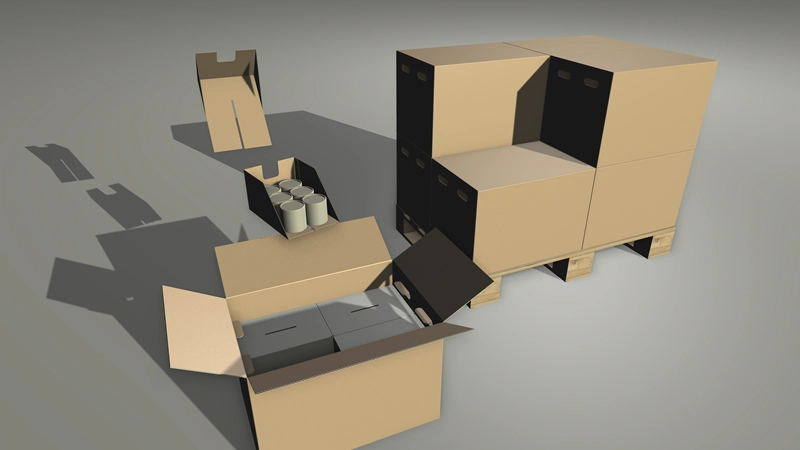
 Efficient palletisation is one of the most important and often overlooked aspects of corrugated and carton packaging design. Poorly optimised packaging can lead to wasted pallet space, increased transport costs, damaged products, and inefficient warehouse handling.
As shipping costs continue to rise and sustainability targets become more demanding, businesses are increasingly looking for ways to maximise pallet efficiency without compromising product protection or retail presentation.
Modern packaging CAD software such as KASEMAKE Packaging CAD Software helps packaging designers create corrugated and carton packaging that is optimised not only for production, but also for transport, storage, and retail distribution.
Why Pallet Efficiency Matters
Every unused area on a pallet represents wasted transport capacity. If packaging dimensions are not carefully planned, businesses may ship fewer products per load than necessary, increasing
- Transport costs
- Fuel consumption
- Warehouse space requirements
- Handling time
- Carbon emissions
Even small dimensional changes to a carton or corrugated pack can have a significant impact when multiplied across thousands of pallets and shipments.
Efficient design helps businesses
- Maximise pallet surface usage
- Reduce shipping costs
- Improve load stability
- Minimise product damage
- Improve warehouse efficiency
- Support sustainability targets
One of the key principles of pallet-efficient packaging design is ensuring that the external dimensions of a pack work effectively with standard pallet sizes. Rather than designing a pack in isolation, packaging designers should calculate dimensions that allow the maximum number of units to fit onto a pallet without overhang.
Overhanging cartons create several problems
- Increased risk of transit damage
- Reduced load stability
- Crushed corners and edges
- Poor stacking performance
- Less efficient wrapping and handling
By designing packs to fit neatly within pallet boundaries, businesses can achieve safer and more efficient logistics operations.
KASEMAKE allows designers to quickly modify and test packaging dimensions to optimise pallet layouts and improve load efficiency before production begins.
The Importance of Stacking Strength Calculations
Maximising pallet utilisation is only effective if the packaging can withstand the stacking loads involved during shipping and storage.
Corrugated packaging must be carefully designed to balance
- Material usage
- Board grade selection
- Compression strength
- Product protection
- Shipping requirements
Incorrect stacking calculations can result in
- Box collapse
- Product damage
- Crushed packaging
- Increased returns
- Failed transit testing
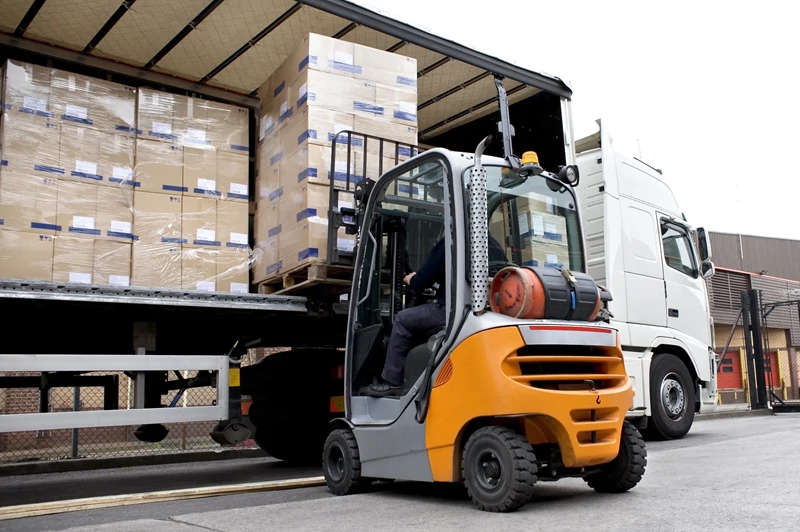
KASEMAKE includes tools that assist packaging designers with stacking strength calculations and structural analysis, helping ensure that corrugated packaging performs correctly throughout the supply chain. This allows designers to evaluate how packaging will behave when stacked on pallets and transported through distribution networks.
By accurately calculating stacking performance early in the design process, businesses can avoid costly over-engineering while still maintaining adequate protection.
Improving Shelf Ready Packaging Efficiency
Shelf Ready Packaging (SRP) introduces additional complexity when optimising pallet layouts.
Retail-ready packs must balance
- Efficient shipping
- Retail shelf dimensions
- Product visibility
- Easy opening features
- Consumer presentation
A poorly sized SRP may work well on a retail shelf but waste significant pallet space during transport.
Small dimensional changes can dramatically affect
- Number of packs per pallet
- Cases per layer
- Overall shipping efficiency
- Warehouse storage density
Designers must therefore consider the entire packaging journey, from production and palletisation through to retail display.
KASEMAKE allows packaging designers to adjust structural dimensions quickly and evaluate alternative layouts, helping businesses achieve the right balance between retail presentation and logistics efficiency.
Reducing Shipping Costs Through Smarter Design
Optimising packaging for pallet efficiency can generate substantial cost savings across the supply chain.
Benefits include
- More products shipped per load
- Reduced transport frequency
- Lower fuel costs
- Improved warehouse utilisation
- Reduced transit damage
- Lower packaging waste
These improvements also contribute directly to sustainability goals by reducing unnecessary transport movements and lowering overall carbon emissions. In many cases, relatively small packaging adjustments can produce major long-term operational savings.
Balancing Material Usage and Performance
As with all packaging design, optimisation requires balance.
Reducing pack dimensions too aggressively may improve pallet density but compromise
- Product protection
- Stacking strength
- Retail appearance
- Ease of handling
Similarly, increasing board strength unnecessarily may improve stacking performance while increasing material costs and overall pack weight.
The goal is to find the most commercially efficient solution, one that balances
- Material costs
- Structural performance
- Production efficiency
- Transport optimisation
- Retail requirements
Modern packaging CAD software makes this process significantly faster and more accurate than traditional manual methods. Smarter Packaging Design with KASEMAKE
Packaging design is no longer simply about creating a box, it is about optimising the entire production and distribution process.
KASEMAKE helps corrugated and carton packaging manufacturers
- Optimise pallet layouts
- Improve stacking strength analysis
- Reduce transport inefficiencies
- Improve material utilisation
- Streamline packaging workflows
- Develop more sustainable packaging solutions
By considering pallet efficiency during the structural design stage, businesses can reduce costs, improve logistics performance, and create packaging that performs more effectively throughout the supply chain.
